

Our Team
aPNT is composed of world-leading research staff, consistently succeeding in applied research projects and defence technology commercialization. Spanning the domains of Atomic Molecular Optical physics, as well as electrical, mechanical, control and automation engineering, the team delivers on fundamental research advancement through to turn-key demonstrators.
Adelaide Hub Node
South Australia Node

Director, aPNT
Associate Professor Andy Boes
Andy (Andreas) is an Associate Professor and leads the Assured Positioning Navigation and Timing (aPNT) research hub. His work centers on advancing hardware and technologies to enable reliable aPNT solutions. His research specifically explores the use of integrated photonics to miniaturize and enhance sensing and timing systems.


Chief Investigator
Professor Andre Luiten
Andre is a Professor at Adelaide University's School of Physics, Chemistry and Earth Sciences, holding the university's positions of Chair of Experimental Physics and IPAS Chief Innovator, leading AU's Precision Measurement Group. His expertise in optical atomic clocks and desire to make real impacts, has led him to be the co-Founder and CEO of QuantX Labs, an industry-leading defence start-up.


Associate Investigator
Dr. Ashby Hilton
Ashby is a mid-career researcher in the fields of precision metrology and quantum optics. His current focus is on the development and testing of portable optical atomic clocks and related technologies. He loves to be in the lab, making things work and solving problems with his colleagues.

Associate Investigator
Dr. Elizaveta Klantsataya
Elizaveta (Liz) is physicist with expertise in optics and photonics, atomic and molecular optics, and laser development. Her work centres on portable atomic clocks for aPNT applications, combining laboratory research with field trials to develop practical, compact clock instrumentation that performs beyond controlled laboratory environments.

Associate Investigator
Dr. Nicolas Bourbeau-Hébert
Nic specialises in digital signal processing applied to optical metrology and FPGA-based control of physics experiments. He also has experience in the development of frequency combs and their applications. His background in engineering physics allows him to perform work at the boundary of fundamental science and engineering.

Associate Investigator
Dr. Aidan Strathearn
Aidan works on the theory of atomic clocks, drawing on a background in open systems and quantum noise. His main focus is on improving stability of portable clocks. In his spare time, he enjoys cycling and playing guitar.

Associate Investigator
Dr. Christopher Billington
Chris is a software engineer working on autonomous operation of portable atomic clocks. He has a background in cold atom physics and contributes to atomic physics theory and numerical modelling in the context of atomic clocks.

Associate Investigator
Dr. Sarah Scholten
Sarah’s research focuses on improving the performance of a rubidium two-photon dual-colour atomic clock. She is also interested in the design, construction, and use of optical frequency combs for atomic clockworks and broader spectroscopic applications. Sarah is deeply interested in translating experimental discoveries into real-world devices that solve difficult problems.

Associate Investigator
Dr. Sarah Watzdorf
Sarah is a grant-funded researcher in the Portable Atomic Clocks group at the Institute for Photonics and Advanced Sensing (IPAS). She work as part of a large, diverse team to develop robust portable optical atomic clocks for precision timekeeping at sea. Her research area is developing frequency combs and next-generation spectroscopy systems to generate timing signals that can be used in lieu of GPS.

Associate Investigator
Dr. Nicholas Nardelli
Nick's expertise lies in ultrafast laser science and optical frequency comb design for precision frequency metrology. He received his Ph.D. in 2023 from the University of Colorado Boulder, working at the National Institute of Standards and Technology (NIST). His work focused on the construction of robust and ultra-low noise optical frequency combs, which have enabled the highest stability and accuracy atomic clock experiments.

Associate Investigator
Dr. Allan McWilliam
Allan is an applied physicist specialising in the development of atomic sensors and optical clock technologies. Prior to joining the portable atomic clocks group at Adelaide University, he began his research career at the University of Strathclyde, where he focused on magnetic sensing, vapour cell fabrication, and precision optical spectroscopy.

Associate Investigator
Dr. Rachel Cannon
Rachel is an experimental physicist working on compact, high-precision atomic clocks at Adelaide University. Previously, she has worked on developing compact cold atom systems and laser devices for quantum technologies

Research Staff
Dr. Benjamin White
Ben is a cold atom physicist with a background in laser cooling. His PhD explored compact ytterbium magneto-optical traps, and he has a keen interest in portable optical clock technology. He also maintains an open resource tracking the performance and development of portable atomic clocks

Research Staff
Mr. Hannes Griesser
Hannes has experience across a variety of domains relevant to field-deployable PNT technologies, including lasers, photonic integrated circuits, signal processing and Rubidium vapour atomic clocks.

Hub Manager
Dr. Bryn Crawford
Dr. Crawford has over 10 years of experience in managing university-industry collaborative research portfolios, with a focus on supporting technology commercialization. With a background in mechanical engineering and manufacturing, both in university and industry settings, his focus is delivering value to all stakeholders.
Victoria Node

Chief Investigator
Professor Allison Kealy
Professor Allison Kealy is Director of the Innovative Planet Research Institute at Swinburne University of Technology and Interim CEO of the SHIELD CRC. An expert in positioning, navigation and timing (PNT), she has led major national spatial and positioning initiatives across government, academia and industry, and is a Fellow of the IAG and RIN.


Chief Investigator
Professor Arnan Mitchell
Professor Arnan Mitchell is a Distinguished Professor at RMIT University and is Director of the ARC Centre of Excellence for Optical Microcombs for Breakthrough Science (COMBS). He is a highly multidisciplinary researcher working in micro-chip technologies combining light, sound, fluids and electronics with applications spanning radar systems for defense, high speed fiber optic communications and biomedicine.


Chief Investigator
Professor Brant Gibson
Professor Gibson is an experimentalist advancing diamond quantum sensing for assured navigation in GNSS‑denied environments and next generation communications. He has published extensively, developed Australia’s first commercial quantum security product, and works closely with academic, industry, and government partners while leading research and innovation roles at RMIT University and Phasor Quantum.


Associate Investigator
Associate Professor Tapio Simula
Dr. Tapio Simula is an Associate Professor of physics at Swinburne University of Technology. His work ranges from theoretical foundations of neutral atoms, superfluid systems and quantum computation through to applications of quantum and quantum adjacent sensing technologies. He leads a research laboratory on emergent phenomena in synthetic active matter systems.

Associate Investigator
Dr. Joseph O'Leary
Dr. Joe O’Leary is a postdoctoral research fellow in Positioning, Navigation, and Timing at Swinburne University of Technology. Joe has a background in applied mathematics and signal processing. He has developed estimation algorithms in space object tracking and X-ray pulsar astrophysics. He currently works on developing algorithms for GNSS-denied navigation.

Partner Investigator
Dr. Andy Sayers
Dr. Andy Sayers is a co-founder and CTO at Phasor Quantum and its sister company Phasor Innovation. Andy has a background in electronics engineering and applied physics, with over 25 years’ experience in the defence industry. Throughout his career he has been an innovation leader across a range of technology areas, including quantum sensing and navigation.
Queensland Node

Chief Investigator
Professor Warwick Bowen
Prof Bowen is Director of the ARC Centre in Quantum Biotechnology, applying quantum technologies into the life sciences. He leads the Quantum Optics Laboratory at UQ, partners with DSTG to develop precision optomechanical sensors for PNT, and is a founder of the start-ups Elemental Instruments and NostiQ Tools.


Associate Investigator
Dr. Benjamin Carey
Dr Benjamin Carey is a Senior Postdoctoral Research Fellow at the University of Queensland whose research focuses on quantum-enabled sensing, optomechanics, and precision measurement. His work spans magnetic and inertial sensing, integrated photonics, and microfabricated devices, with applications in fundamental science and emerging real-world sensing technologies.

Associate Investigator
Dr. Nishta Arora
Dr. Nishta Arora is a Postdoctoral Research Fellow at the University of Queensland working in the Queensland Quantum Optics Laboratory. Her research focuses on nanomechanical and optomechanical systems for precision sensing, spanning MEMS/NEMS, nonlinear dynamics, integrated photonics, and two-dimensional materials, currently focused on chip-scale technologies for inertial sensing, magnetometry, and next-generation sensing.
Western Australian Node

Chief Investigator
Professor Sascha Schediwy
Professor Sascha Schediwy is a recognised leader in astronomy, space, and national security research, taking laser timing and communications through Earth's atmosphere into space - leading teams building TeraNet's ground network, SKA timing system, and sovereign optical technologies. He is an ARC Industry Fellow and Space Awards Academic of the Year


New South Wales Node
Partner Investigator
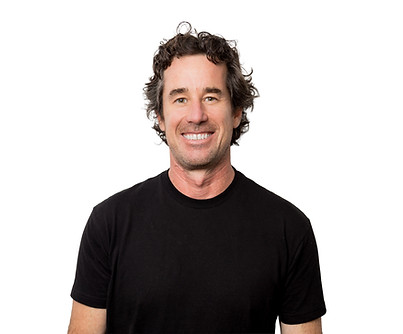
Dr. Jim Rabeau
Dr Jim Rabeau, CEO and co-founder of Deteqt, a University of Sydney spinout backed by international venture funding developing chip-scale quantum magnetic sensors. Former President of Infleqtion. Deteqt's sensors operate at room temperature in a chip-scale form factor, removing the bulk, cooling, and scalability that constrain conventional quantum sensors.

